The Ultimate Guide to Commercial Metal Doors: Strength, Security, and Long-Term Performance for Modern Businesses
Commercial buildings demand doors that go far beyond basic functionality. They must withstand constant traffic, resist wear, deliver strong security, and last for years with minimal maintenance. This is why commercial metal doors have become the top choice for warehouses, restaurants, offices, retail outlets, industrial facilities, and multi-unit buildings. Engineered for durability, safety, and performance, these doors set the standard for modern commercial environments.
This comprehensive guide explores everything you need to know about commercial metal doors—from design and benefits to installation, performance, and long-term value.
Why Commercial Metal Doors Are Essential for Modern Businesses
Business owners rely on structural elements that support daily operations. Doors form the first line of defense and affect convenience, energy efficiency, and the overall user experience. Metal doors provide the ideal combination of reliability and strength, making them vital for:
- High-traffic entry and exit points
- Security-sensitive areas
- Fire-rated zones
- Storage and utility rooms
- Back entrances and loading docks
- Restaurant, medical, and retail facilities
Their solid performance and resilience make them a long-term investment for any serious commercial property owner.
Key Advantages of Metal Doors in Commercial Settings
Below are the major benefits that set commercial metal doors apart from other materials.
1. High Security
Metal doors offer superior resistance against forced entry thanks to their solid core, reinforced frames, and robust locking systems. They are often used in businesses that store equipment, cash, and sensitive documents.
2. Fire Resistance
Many metal doors are fire-rated, helping slow the spread of fire and smoke. This is crucial for compliance with safety regulations and emergency planning.
3. Longevity
Unlike wood or vinyl, metal does not swell, warp, or crack under changing temperatures or humidity. The durability ensures years of uninterrupted performance.
4. Low Maintenance
Metal doors require minimal upkeep—mostly routine cleaning, lubrication of hinges, and occasional inspection of seals.
5. Energy Efficiency
When combined with insulated cores or weatherstripping, metal doors help control indoor temperatures and reduce energy expenditure.
6. Noise Reduction
Metal’s density naturally blocks sound, making it ideal for loud environments like restaurants, factories, and workshops.
7. Customizable Design
Modern commercial metal doors are available in numerous finishes, colours, vision panels, and hardware configurations.
Types of Commercial Metal Doors
Businesses select metal doors based on their specific operational needs. Here are the most common types used across industries:
Hollow Metal Doors
These are the standard choice for most commercial properties. They consist of a steel exterior filled with insulation or reinforced materials.
Insulated Metal Doors
Designed to maintain temperature-controlled environments such as cold storage, medical rooms, and industrial facilities.
Fire-Rated Metal Doors
These doors can withstand fire for specific durations—typically 20, 45, 60, or 90 minutes.
Steel Security Doors
Built with strengthened cores and heavy-duty frames to offer maximum protection against break-ins or physical damage.
Metal Roll-Up Doors
Common in warehouses, garages, and loading docks. They save space and can cover large openings.
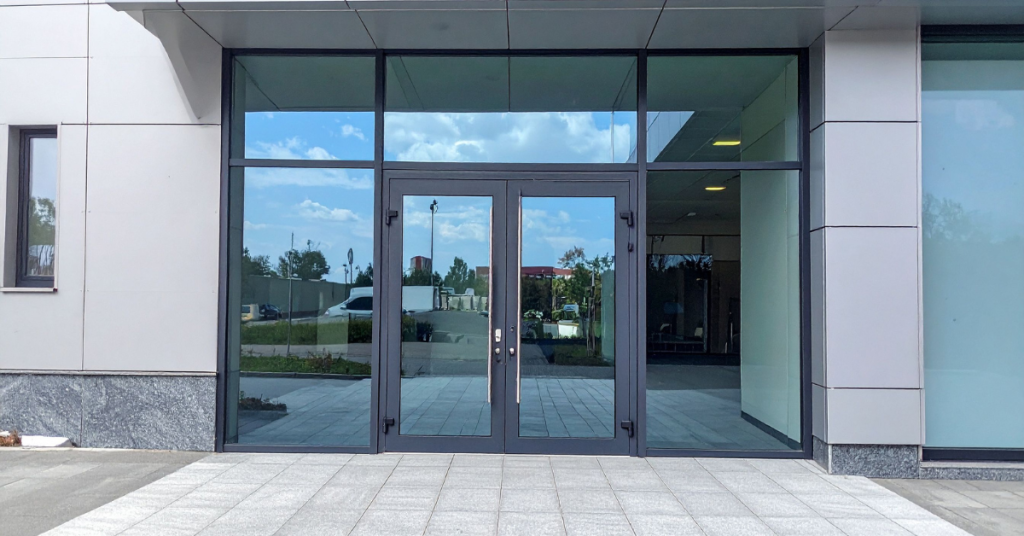
Aluminium Doors
Perfect for storefronts thanks to their sleek appearance and lightweight construction, although not as strong as steel.
Where Commercial Metal Doors Are Commonly Used
Commercial metal doors are versatile, making them suitable for numerous industries:
- Warehouses and storage units
- Restaurants and fast-food chains
- Retail buildings
- Schools and universities
- Health clinics and hospitals
- Government buildings
- Office complexes
- Industrial plants
- Hotels and hospitality spaces
Where strength, safety, and performance matter most, metal doors remain the preferred choice.
Material Features and Construction of Metal Doors
A high-quality metal door’s strength comes from its thoughtful construction. Key components include:
| Component | Purpose | Notes |
|---|---|---|
| Steel Face Sheets | Exterior protection | Thickness varies for security level |
| Core Material | Insulation or strength | Honeycomb, polystyrene, or mineral wool |
| Reinforced Hinges | Prevent sagging | Ideal for heavy-use doors |
| Lock Reinforcements | Strengthens hardware | Essential for security |
| Fire-Rated Core | Meets safety codes | Keeps fire from spreading |
| Galvanized Steel | Rust protection | Ideal for humid climates |
These features work together to deliver long-term performance even in demanding environments.
Factors to Consider Before Choosing a Commercial Metal Door
Selecting the right door is essential for performance and cost-effectiveness. Consider the following:
1. Traffic Level
High-traffic areas require stronger materials and reinforced hardware.
2. Security Needs
If the building contains valuable assets, choose thicker steel and robust locks.
3. Fire Code Compliance
Commercial buildings often require fire-rated doors in specific areas.
4. Climate Conditions
If your region has extreme temperatures, insulated metal doors help maintain internal conditions.
5. Aesthetic Requirements
Front-facing areas may need powdered coatings or custom finishes.
6. Door Size
Back-of-house areas may require oversized doors for equipment movement.
7. Maintenance Capability
Choose materials and finishes that align with your maintenance schedule.
Installation Considerations for Commercial Metal Doors
A high-quality door is only as effective as its installation. Proper installation ensures:
- Accurate alignment
- Smooth opening and closing
- Noise-free operation
- Proper sealing
- Maximum security
- Fire compliance
It is always recommended to hire professional installers who are trained in commercial-grade systems—especially for heavy metal doors.
Comparing Metal Doors With Other Door Materials
| Feature | Metal | Wood | Fiberglass |
|---|---|---|---|
| Security | Excellent | Moderate | Good |
| Fire Resistance | High | Moderate | Moderate |
| Durability | Excellent | Low to moderate | High |
| Maintenance | Low | High | Low |
| Cost | Moderate | Moderate | Higher |
| Weather Resistance | Excellent | Poor | Good |
| Lifespan | Very long | Medium | Long |
Metal doors stand out clearly for their reliability, safety, and long-term value.
Common Applications of Metal Doors in Restaurants
Restaurants increasingly adopt metal doors due to hygiene and security requirements. They are used for:
- Kitchen entrances
- Walk-in storage rooms
- Rear access points
- Waste disposal zones
- Staff entry areas
- Emergency exits
Because restaurants deal with heat, moisture, and heavy traffic, metal doors ensure consistent performance and safety.
Restaurants and service businesses can find reliable, industry-grade commercial metal door solutions through trusted providers such as Austin Doors.
Maintenance Tips for Longevity
Metal doors require minimal care, but consistent maintenance extends their lifespan.
- Clean door surfaces with mild detergents
- Inspect hinges, locks, and closers
- Lubricate moving components
- Check for rust spots and repaint if necessary
- Replace damaged weatherstripping
- Test fire-rated doors regularly
- Ensure alignment to avoid frame strain
A well-maintained metal door can last decades.
Common Problems and Solutions for Metal Doors
Even with their durability, metal doors may experience occasional issues:
1. Rusting
Solution: Use galvanized steel or apply anti-rust coatings.
2. Door Misalignment
Solution: Adjust hinges or tighten screws.
3. Lock Issues
Solution: Choose commercial-grade locksets and conduct routine inspections.
4. Noisy Hinges
Solution: Lubricate regularly with silicone spray.
5. Air Leakage
Solution: Replace weatherstripping for better insulation.
Addressing problems early prevents long-term damage.
Customisation Options for Commercial Metal Doors
Metal doors are highly customizable to suit specific business needs:
- Custom colours and finishes
- Insulated or non-insulated cores
- Kick plates and protective skins
- Panic bars and emergency hardware
- Glass window inserts
- Access control integration
- Double-door configurations
- Fire rating levels
These options ensure the door performs optimally in its intended environment.
Why Businesses Prefer Metal Doors Over Others
Commercial property owners consistently choose metal doors for:
- Unmatched durability
- Regulatory compliance
- Strong return on investment
- Adaptability to all industries
- Safety and fire performance
- Low lifetime cost
They provide peace of mind while balancing appearance and functionality.
Final Thoughts
Commercial metal doors are a foundation of modern commercial architecture, offering robust security, dependable performance, and long-term value. Whether you’re equipping a retail space, restaurant, warehouse, or office building, metal doors ensure reliability in demanding environments. By understanding their benefits, features, materials, and installation requirements, you can select a door that serves your business for years to come.
For high-performance commercial metal door solutions, professional installers and trusted providers ensure quality service, proper fit, and long-lasting function tailored to your business needs.